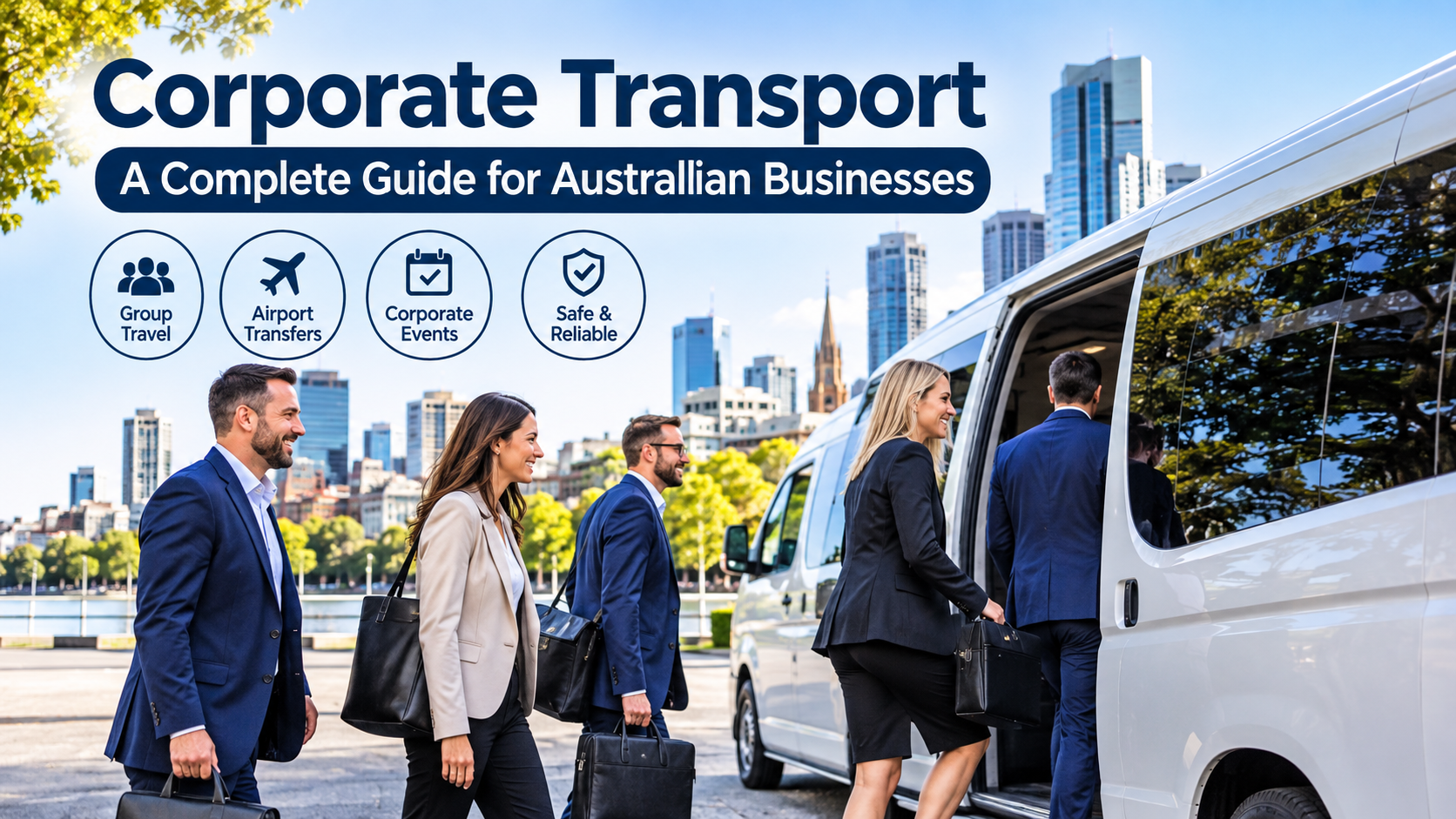
Organising transport for employees, clients, or business events can quickly become complicated. When people need to travel between offices, attend conferences, reach airports, or visit company functions, relying on individual cars and last-minute travel arrangements can create unnecessary stress.
That is where professional corporate transport makes a difference. It gives businesses a more organised way to move people while helping employees and guests arrive comfortably and on time.
Whether you are arranging transport for a small team meeting, a company conference, or a large corporate event, choosing the right transport option can improve the entire experience.
For Australian businesses, corporate transport can include private minibuses, larger buses, airport transfers, and scheduled corporate shuttle services. The best option depends on the number of passengers, travel distance, schedule, and level of service required.
This guide explains how corporate transport works, why businesses use it, how to choose the right vehicle, and what to consider before booking.
What Is Corporate Transport?
Corporate transport is a professional passenger transport service arranged by a business to move employees, clients, executives, or event attendees between locations.
It can be used for everyday business travel as well as occasional events. Instead of asking everyone to arrange their own transport, a company organises a shared vehicle with a planned pickup time and destination.
Common corporate transport services include:
- Employee transport between offices and work locations.
- Airport transfers for staff, executives, and visiting clients.
- Transport to conferences, exhibitions, and business meetings.
- Group travel for corporate functions and networking events.
- Transfers between hotels, venues, and business facilities.
- Transport for training sessions and company retreats.
For example, a company hosting a conference in Adelaide may have employees arriving from different locations. Arranging a minibus or bus service can help bring attendees to the venue together rather than relying on multiple taxis or private vehicles.
Why Is Corporate Transport Important for Businesses?
Transport is often treated as a small part of event or business planning. However, poor transport arrangements can affect punctuality, employee comfort, and the overall impression a company creates.
A well-planned corporate transport arrangement helps businesses manage these challenges.
1. Better Time Management
When employees or guests travel separately, arrival times can vary. Traffic, parking delays, and unfamiliar routes can make it difficult to keep everyone on schedule.
A shared transport service gives the organiser greater control over pickup times and arrival arrangements.
For example, if a team needs to attend a morning conference, a pre-arranged vehicle can collect everyone from an agreed meeting point and travel directly to the venue. This reduces the need to coordinate multiple arrivals.
2. A More Professional Experience
The travel experience can influence how clients and business partners view a company. Arranging comfortable transport for visiting clients, speakers, or executives demonstrates attention to detail. It also removes the inconvenience of finding parking or arranging unfamiliar local travel.
For businesses welcoming interstate visitors to South Australia, a pre-booked airport transfer can make the arrival process much easier.
3. Less Transport Coordination
Organising separate taxis or asking employees to drive themselves can create additional work for event managers and administration teams.
A corporate shuttle can simplify the process by bringing passengers together under one booking.
The organiser can confirm:
- Pickup and drop-off locations.
- Passenger numbers.
- Departure and arrival times.
- Vehicle capacity.
- Any luggage requirements.
Having these details confirmed in advance makes the travel plan easier to manage.
4. A More Comfortable Group Journey
Employees and clients may prefer travelling together rather than navigating unfamiliar roads or searching for parking.
A suitable minibus or bus provides a shared travel arrangement where passengers can relax during the journey.
For longer trips, choosing the correct vehicle size and allowing enough travel time are especially important.
5. Easier Event Planning
Corporate events often involve several locations. Guests may need to travel from hotels to conference venues, restaurants, event spaces, or networking functions.
A planned corporate transport service can connect these locations and help keep the event schedule organised.
What Types of Corporate Transport Services Are Available?
Different business requirements call for different transport arrangements. Understanding the main options will help you select a service that suits your team.
Corporate Shuttle Services
A corporate shuttle is generally a scheduled or pre-arranged transport service that moves passengers between selected locations.
It may operate between:
- Hotels and conference venues.
- Offices and nearby business locations.
- Airports and accommodation.
- Parking areas and event entrances.
- Multiple company sites.
A shuttle service is particularly useful when many attendees need to travel along the same route.
For example, a business hosting a full-day seminar could arrange morning pickups from a hotel and return transfers after the event.
Corporate Airport Transfers
Airport transfers are useful when employees, executives, or clients need transport to and from an airport.
They are particularly helpful for:
- Interstate business visitors.
- Visiting management teams.
- Conference speakers.
- Groups travelling for training or meetings.
- Employees attending business events in another city.
A group airport transfer can make it easier to coordinate arrivals and departures. Before booking, confirm flight times, passenger numbers, luggage requirements, and the pickup procedure.
Businesses arranging travel around Adelaide can explore airport transfer services for group transport requirements.
Corporate Event Transport
Businesses regularly organise conferences, awards nights, product launches, networking events, and staff celebrations.
Corporate event transport helps attendees travel between meeting points and venues without having to arrange their own vehicles.
It can also be useful when an event takes place outside the city centre or in an area with limited parking.
Minibus and Bus Hire for Business Groups
The size of the group is one of the most important factors when choosing corporate transport.
A small team may only need a minibus, while a large conference group may require a bigger bus.
Going South Mini Bus offers different vehicle capacities, including 13-seat minibuses, a 24-seat minibus, and a 57-seat bus, subject to availability and booking requirements.
You can review the available fleet and bus options before deciding which vehicle may suit your group.
How to Choose the Right Corporate Transport Service?
Selecting a transport provider involves more than comparing prices. The service should match your passenger numbers, schedule, destinations, and practical requirements.
Here are the main things to consider.
1. Confirm the Number of Passengers
Start by identifying how many people need transport. A vehicle that is too small may require multiple trips. A vehicle that is unnecessarily large may increase the cost without providing extra value.
Create a passenger list before requesting a quote. Remember to account for any additional attendees who may join later.
2. Understand Your Travel Schedule
Prepare a clear travel itinerary before booking.
Include:
- Pickup time and location.
- Final destination.
- Return journey requirements.
- Any additional stops.
- Expected event finishing time.
If the group needs several transfers throughout the day, provide the full schedule to the transport provider.
3. Consider Luggage and Equipment
Passenger capacity is not the only consideration. Airport groups may carry suitcases, while conference attendees may bring presentation equipment, display materials, or other business items.
Ask the provider whether the vehicle has sufficient luggage and storage space for your group.
4. Check the Vehicle Options
Different vehicles suit different journeys.
Consider:
- Passenger capacity.
- Seating arrangements.
- Luggage space.
- Accessibility requirements.
- Journey length.
- Pickup and drop-off access.
If you are unsure which vehicle to choose, discuss your requirements with the provider before confirming the booking.
5. Ask About Booking Details
Before confirming, make sure you understand the service conditions.
Ask about:
- Pricing and what is included.
- Waiting time and additional stops.
- Cancellation or amendment policies.
- Payment arrangements.
- Driver and pickup coordination.
- After-hours or weekend availability.
Getting these details in writing can prevent misunderstandings later.
How Much Does Corporate Transport Cost in Australia?
There is no single fixed price for corporate transport. The cost depends on the details of the journey and the type of vehicle required.
Common pricing factors include:
- Distance: Longer journeys generally require more time and may cost more.
- Vehicle size: Larger vehicles may have different hire rates from smaller minibuses.
- Duration: A short transfer will usually have different pricing from a vehicle booked for a full day.
- Number of stops: Multiple pickups and drop-offs can affect the overall journey time.
- Timing: Early morning, late-night, weekend, and public holiday bookings may have different conditions.
- Special requirements: Luggage, accessibility, waiting time, and specific itinerary needs may affect the quote.
The best way to understand the cost is to request a tailored quote. Provide accurate passenger numbers, locations, dates, and travel times so the provider can assess the requirements.
Rather than choosing solely on the lowest price, compare the vehicle suitability, service inclusions, reliability, and booking conditions.
Corporate Transport for Different Business Situations
Corporate transport is not limited to large companies. Small businesses, organisations, and event planners can also benefit from organised group travel.
Here are some common examples.
Transport for Conferences and Seminars
A business hosting a conference may need to move employees, guest speakers, and attendees between accommodation and the venue.
A corporate shuttle can help reduce confusion and keep arrivals more organised.
For larger events, consider using scheduled departure times so passengers know exactly where and when to meet.
Transport for Airport Meetings
Imagine a company has a group of six interstate employees arriving in Adelaide for a two-day meeting.
Instead of arranging separate taxis, the business could book a suitable vehicle to collect the group and take them to their accommodation or meeting location.
This creates one coordinated arrival plan and makes it easier to manage the group.
Transport for Staff Functions
Companies often organise dinners, celebrations, team-building activities, and end-of-year functions.
Group transport allows employees to travel together and removes the need for everyone to organise separate parking and driving arrangements.
Businesses planning group celebrations can also explore social function transport options.
Transport for Corporate Retreats
A company retreat may take place outside the city, such as in a regional destination or a winery area.
A pre-arranged minibus or bus can transport employees between the meeting point and the retreat location.
This can be particularly useful when attendees are travelling from different parts of the same region.
Why Consider Going South Mini Bus for Corporate Transport in South Australia?
Businesses looking for group transport in Adelaide and the Fleurieu Peninsula may benefit from working with a local passenger transport provider.
Going South Mini Bus provides group transport services for different occasions across Adelaide and the Fleurieu Peninsula.
Its fleet includes 13-seat minibuses, a 24-seat minibus, and a 57-seat bus, giving customers different vehicle options depending on their group size and travel requirements.
Businesses may consider Going South Mini Bus for:
- Group airport transfers.
- Business and corporate events.
- Staff functions and social gatherings.
- Group travel between venues.
- Regional trips and organised tours.
The right vehicle and service will depend on your itinerary, passenger numbers, and availability.
If you are planning corporate travel, provide the team with your preferred date, pickup location, destination, passenger count, and any luggage requirements.
You can also explore the company’s airport transfer service or contact Going South Mini Bus to discuss your transport requirements.
Tips for Organising Corporate Transport Successfully
A little preparation can make business travel much easier to manage. Use these practical tips when arranging your next booking:
- Book early: Contact the provider as soon as the event date and passenger numbers are known, especially during busy periods.
- Choose one main contact person: Give employees and attendees a clear person to contact about pickup arrangements.
- Share the itinerary: Send pickup times, locations, and important instructions to passengers before the travel date.
- Allow for traffic: Build extra time into the schedule, particularly during peak-hour travel.
- Confirm the booking: Recheck passenger numbers, departure times, and destinations before the journey.
- Plan for changes: Tell the provider as early as possible if the itinerary or passenger count changes.
- Consider return transport: Confirm how passengers will get back after the event rather than arranging it at the last minute.
These steps help reduce avoidable delays and make the experience more straightforward for everyone involved.
Conclusion
Reliable corporate transport can make a real difference to how businesses organise employee travel, client visits, and corporate events. It helps simplify group coordination, supports punctual arrivals, and provides a more comfortable travel experience.
Whether you need a corporate shuttle for a conference, an airport transfer for visiting employees, or a bus for a company function, the key is to choose a vehicle and service that match your actual requirements.
For businesses in Adelaide and the Fleurieu Peninsula, Going South Mini Bus offers a range of group transport options for different occasions.
Plan your journey early, confirm the details, and choose a suitable vehicle to make your next business trip or corporate event easier to manage.
Frequently Asked Questions
What is corporate transport used for?
Corporate transport is used to move employees, clients, executives, and event attendees for business-related travel. Common uses include airport transfers, conferences, meetings, staff functions, and company events.
What is the difference between corporate transport and a corporate shuttle?
Corporate transport is a broad term covering different types of business-related passenger travel. A corporate shuttle is one type of service, usually involving scheduled or pre-arranged trips between selected locations.
Can I book a minibus for a corporate event?
Yes. A minibus can be suitable for smaller business groups attending conferences, meetings, airport transfers, or company functions. The correct vehicle depends on passenger numbers, luggage, and the journey requirements.
How far in advance should I book corporate transport?
It is best to book as early as possible once your date, passenger numbers, and itinerary are confirmed. Larger groups and travel during busy periods may need additional planning. Contact the provider to check availability.
Alos Read: Wedding Guest Transport Adelaide